
How creatine can help with menopause.
This article was originally published on my Substack: Pressue Down there.
I first heard about creatine being used as a supplement last year (2025). My brother-in-law was heavy into working out and optimizing his body. He shared a few podcasts about it and the benefits of exercise in general. I wasn’t impressed, though. There’s something about podcast gym bros that turns me off. I just couldn’t get into the conversations, so I stopped trying. But the creatine seed was planted.
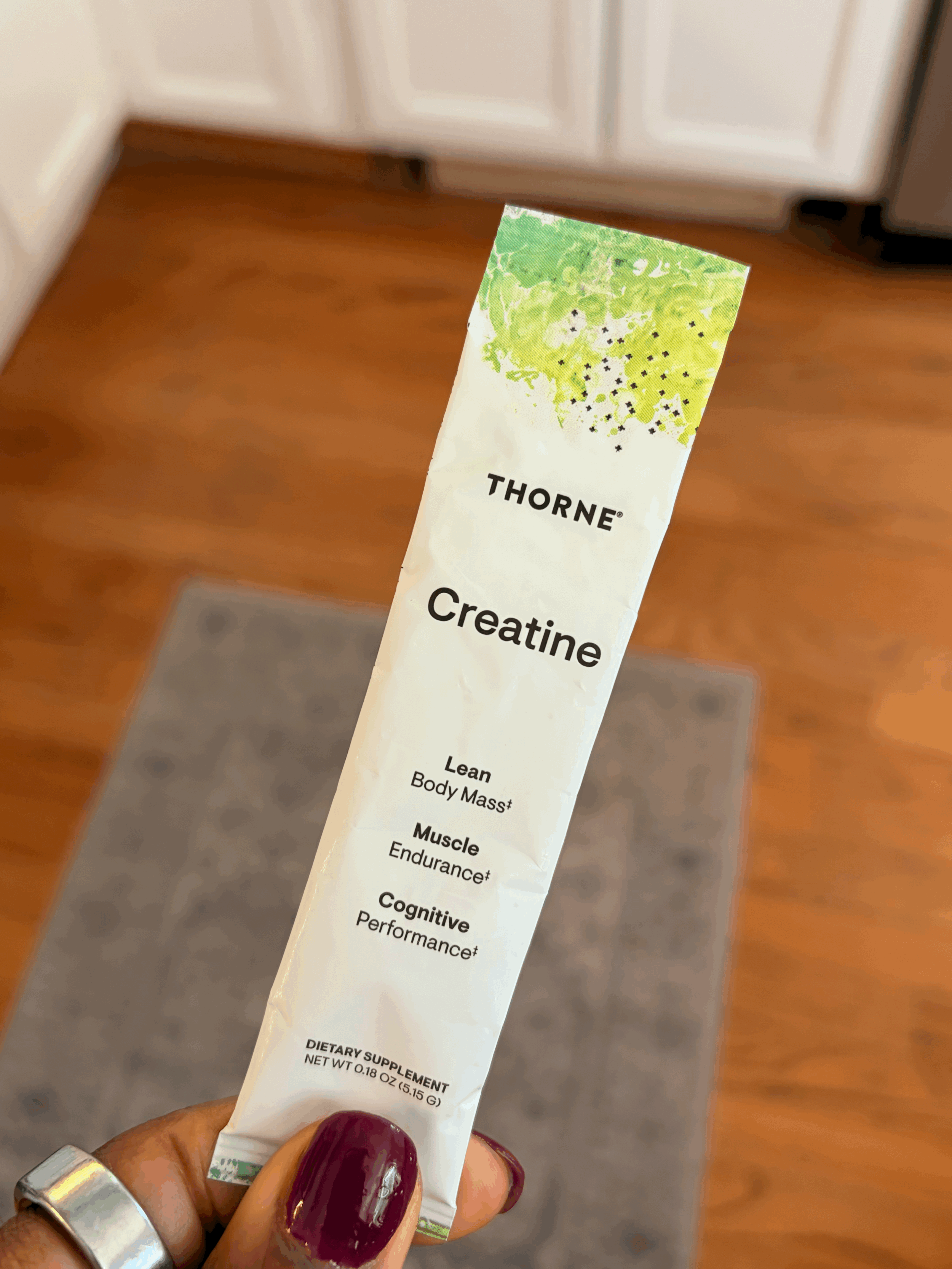
Fast forward a few months, creatine stalked me. It was everywhere! I saw it in vitamin shops and even at department stores. On the occasion, I would scroll past some talk about creatine benefits outside of exercise and recovery. Now, I was interested!
What I appreciated from first learning about creatine was that it was pretty safe, and it had to be taken on a regular and consistent basis for the body to benefit. That gave me permission to experiment on myself. But first, the research.
I’m not an evidence queen who needs scientific data to justify my experiments, but I had to start somewhere, as I do with anything, including herbs.
I wanted to know: What is creatine and what does it do? More specifically, what does it do for women? And so I went on a hunt. I am happy to say the results I gathered are promising.
First off, what’s creatine?
It’s an endogenous compound, meaning it’s naturally produced in the body, that’s used in the process of energy production. But for women, our stores are generally on the lower side than those of men. This could be because we consume less red meat, the most easily accessible way to naturally supplement it, than men do. I found that it’s also available in fish, but not so much in white meat, such as chicken. There may be other reasons why our stores are lower, but I believe they are still working out the details. I do believe we are under more stress, thanks society, where we burn through our reserves more often, leaving us depleted and prone to fatigue.
As far as we know, creatine is primarily utilized by high-energy parts of the body, the skeletal muscles and the brain. It was already a popular supplement among bodybuilders in the 80s, and now it’s popular among our everyday gym bros and gals. Now the brain benefits are becoming more popular, hence the conversation around its use for women, not necessarily the iron-pumping kind.
For our muscles, creatine helps to draw water into the muscle cells and replenishes the energy used during exercise. For this reason, your muscles will literally look “swoll,” or larger and more toned, in addition to minimizing recovery time. That means you can do more, go harder, and look ridiculously great all at the same time.
Due to its effects on muscle mass, creatine will also help boost bone density. Estrogen is known to support bone density. This is why our risk of osteopenia and osteoporosis significantly increases after menopause, when estrogen levels drop off. With muscles looking and functioning better, bone density will naturally increase as a byproduct. It’s the action of muscles tugging and pulling on the bones they are attached to that stimulates our bones to produce more bone-building cells.
Continue reading the rest of the article on Substack.
Purchase this and other supplements specifically recommended for women’s health on Fullscript for a special discount.