Dry Needling for Men's Pelvic Health: Pain, Dysfunction, and Prostate-Related Symptoms
Pelvic floor dysfunction isn't just a women's health issue. Men experience it too, though it's talked about far less. It often leaves men to deal with confusing and uncomfortable symptoms for years before finding the right kind of care. It’s tough out there for women to get the help they need when it comes to pelvic floor and womb-related conditions. This is one area where it’s even tougher for a man to get the help he needs, mostly because of the shame and stigma around it. But the help does exist.
Dry needling, used as part of a broader pelvic health treatment plan, is one option for men dealing with pelvic pain and related symptoms.

What Male Pelvic Floor Dysfunction Can Look Like
The male pelvic floor supports bowel and bladder function and plays a role in sexual function as well. When these muscles become too tight, weak, or uncoordinated, symptoms can include:
Pelvic, perineal, or lower abdominal pain
Pain or discomfort in the penis, scrotum, or testicles without a clear infection or structural cause
Sensation of “sitting on a ball” due to overly tight muscles
Pain during or after ejaculation
Urinary urgency, frequency, or a sense of incomplete emptying
Erectile difficulties tied to muscle tension or pelvic pain rather than vascular causes
Chronic prostatitis-like symptoms with no infection found on testing (often called chronic pelvic pain syndrome, or CPPS)
Pain with prolonged sitting
These symptoms are frequently mistaken as a urologic or prostate issue, when it’s most likely a muscular tension and nervous system problem. This is very common in men who experience or have experienced high levels of stress. (I.e) From the pressure of trying to have a baby to working 50-60+ hours a week because that’s what is expected of men as providers.
The Muscular and Nervous System Component
Chronic stress, prior injury, sports strain, prolonged sitting, or a pattern of unconsciously bracing or guarding the pelvic area can lead to persistent tightness in the pelvic floor muscles. This tightness can do a number of things, including:
Compress nerves that run through the pelvic floor, contributing to referred pain in the penis, scrotum, or perineum
Restrict blood flow and coordination needed for normal sexual function
Create trigger points that refer pain to the genitals, lower abdomen, or inner thighs
Keep the nervous system in a guarded, protective state, which can perpetuate the pain cycle
This is why many men with these symptoms are told their prostate and urinary tests are normal, yet the pain and dysfunction persist. The source is often muscular and neurological rather than infectious or structural. This leaves patients with little solution, feeling hopeless, broken, and even more stressed. This happens way more often than the medical system would like to admit.
Where Dry Needling Fits In
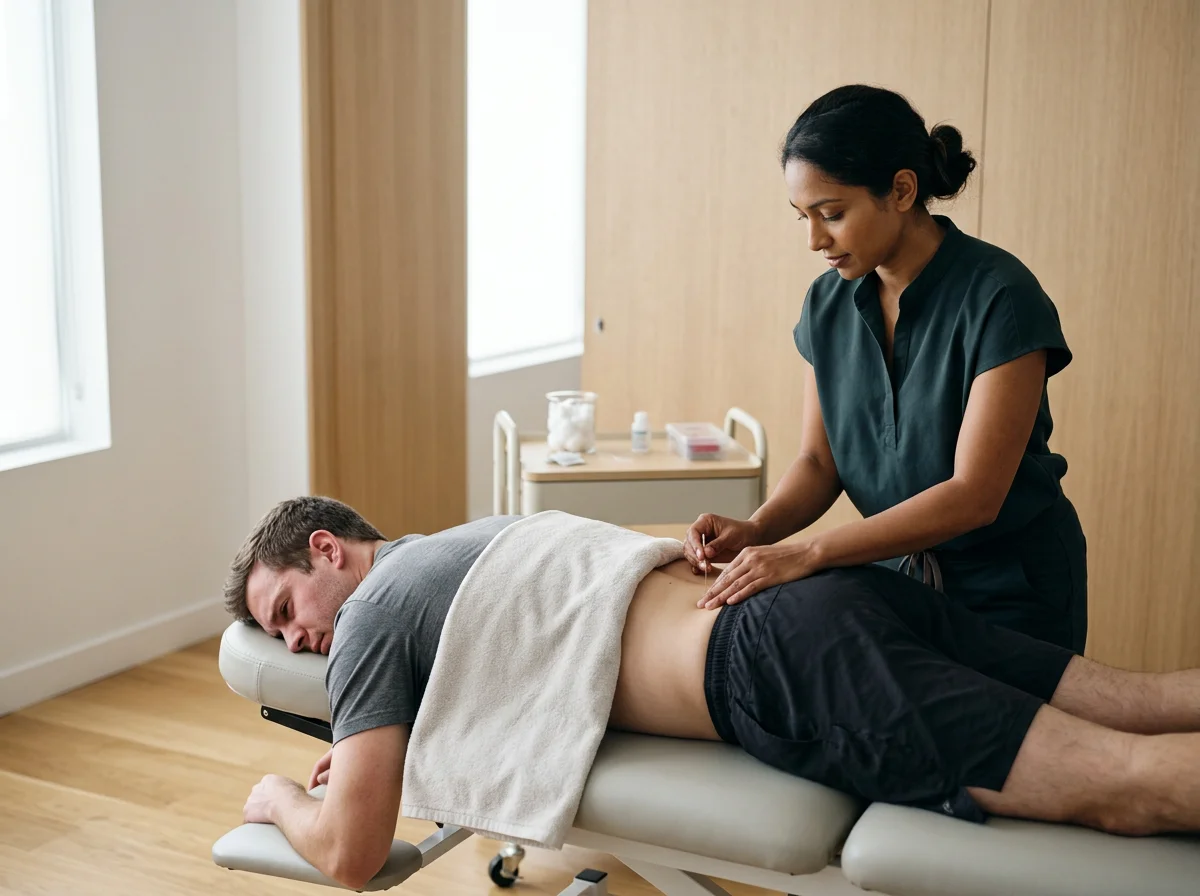
For men whose symptoms are connected to pelvic floor or surrounding muscle tension (hips, glutes, adductors, lower abdomen), dry needling may be used to:
Release trigger points contributing to referred genital or perineal pain
Reduce chronic guarding and tension in the pelvic floor and surrounding muscles
Support the nervous system in shifting out of a chronically braced, protective state
Complement pelvic floor physical therapy aimed at improving muscle coordination
Important: As with pelvic floor work, treatment involving the pelvic floor muscles directly requires specialized training beyond general dry needling certification, and any internal work requires explicit consent and appropriate scope of practice. A thorough evaluation, including ruling out infection, structural issues, or other medical causes with a urologist when appropriate, should come first.
What Treatment Typically Involves
Given how sensitive and individual these symptoms are, treatment usually starts with a detailed intake and physical assessment, and may include:
Pelvic floor physical therapy
Dry needling and manual therapy to the pelvic floor and/or surrounding muscles, where appropriate
Breathing and relaxation techniques to reduce chronic guarding and relax the nervous system
Education on posture, sitting habits, and activity modification
Frequently Asked Questions
Is this the same as treating erectile dysfunction? Not directly. This approach addresses muscular and nervous-system-related contributors to pelvic pain and dysfunction, which can sometimes overlap with erectile difficulties. It’s not uncommon to experience improvement in ED with pelvic floor PT. But vascular, hormonal, or other medical causes should be evaluated by a physician.
Should I see a urologist first? It’s recommended, since ruling out infection or other medical causes is an important first step.
Is it normal to feel nervous about this kind of treatment? Absolutely! We already know you will be nervous and will do what we can to make you feel as comfortable as possible. We will walk you through exactly what's involved, answer questions, and never proceed without clear consent at every step.
This article is for general educational purposes and isn't a substitute for individualized medical advice. Symptoms involving pelvic, genital, or urinary pain should be evaluated by a qualified medical provider to rule out infection or other medical causes before pursuing pelvic floor-focused treatment.
Ready to talk through your symptoms in a confidential, judgment-free setting? Book a free consultation with Dr. Kenael Segal to see if dry needling is right for you.